Part II — Where Does the Wind Blow? The Winners
Build an airport. Subsidize an airline. Borrow to develop a resort. Raise the hotel tax, add a visitor fee and introduce another form at the border. Then spend millions promoting the destination as welcoming and affordable.

Who wins as sovereign debt, energy costs and travel friction reshape global tourism?
Governments Want More Tourism Revenue. Are They Pricing Visitors Out?
Build an airport. Subsidize an airline. Borrow to develop a resort. Raise the hotel tax, add a visitor fee and introduce another form at the border. Then spend millions promoting the destination as welcoming and affordable.
For years, this approach could survive because borrowing was cheap, energy costs were manageable and many travelers could absorb the extra charges. Those conditions are changing.
That does not mean people will stop traveling. It means they will travel differently. A family may replace one long-haul holiday with several shorter trips. A visitor priced out of a major capital may choose a less expensive region and stay longer. Wealthy travelers may continue to pay for privacy and convenience, while middle-income households examine every additional cost.
The important question is no longer simply where travelers go. It is who benefits when their spending moves—and how much of that spending remains in the destination.
Economic pressure does not automatically destroy tourism demand. It redirects demand, changes the way trips are purchased and shifts profits between businesses and places.
Three shifts that will shape the next decade
Part I examined the pressures created by sovereign debt, expensive energy and reduced government capacity to support tourism. Part II looks at who may gain as the industry adjusts.
Three shifts matter most. First, accessibility gains importance relative to distance and fame. Travelers increasingly compare the full cost and difficulty of a journey, not just the attraction waiting at the end.
Second, profits favor businesses with manageable costs and stronger control over distribution. A busy hotel or airline can still lose money. Booking platforms, payment providers and other intermediaries may collect their fees even when the businesses delivering the experience struggle.
Third, destinations that make travel simpler can gain ground on better-known competitors. Heritage, scenery and brand recognition remain valuable, but they do not excuse costly visas, unpredictable charges or a poor reputation.
Above all, higher arrival numbers do not necessarily mean greater local prosperity. The measure that matters is how much value the destination keeps.
1. Nearby markets become more important
Domestic travel, neighboring countries, road trips and regional rail routes are likely to become more important when long-haul travel becomes expensive or uncertain. A shorter journey generally involves less exposure to high airfares, currency movements and complicated entry procedures.
Tourism authorities have traditionally treated international arrivals as the headline measure of success. Yet a traveler crossing a nearby border can contribute more to the local economy than someone arriving from the other side of the world, depending on spending, length of stay and the businesses used.
There is an important limitation. Domestic tourism is a source of resilience, not an automatic replacement for high-spending international travel. Weekend visitors often spend less and stay for fewer nights. In lower-income countries, the domestic middle class may not be large enough to support the existing tourism industry.
Destination managers should therefore assess the purchasing power, travel frequency and likely spending of nearby markets before assuming regional volume will replace lost long-haul revenue.
2. Destinations that remove friction gain an advantage
Travel friction includes everything that makes a trip more expensive, difficult or uncertain: visa applications, airport charges, confusing entry rules, unreliable payments, safety concerns and unexpected fees.
These obstacles are not the same as reputation. A destination may be easy to enter but suffer from negative publicity. Another may have an excellent tourism brand yet make entry unnecessarily complicated. Both problems affect bookings, but they require different solutions.
Cambodia illustrates how ease of entry cannot fully offset damage to a country's image. Thailand has a strong and familiar tourism brand, but changes in entry rules can still create uncertainty for particular visitor groups. Ethiopia shows how conflict-related perceptions can undermine a destination with significant cultural assets and air connectivity.
These are not fixed rankings: visa rules, security conditions and perceptions change. The useful exercise is to measure entry friction and reputation separately, then identify which barrier is actually discouraging bookings.
Our earlier analysis of how conflict changes destination perceptions explains why a strong tourism product cannot simply be advertised over a loss of traveler confidence.
Tourism taxes are another part of the equation. Fees can legitimately finance conservation and infrastructure, but cumulative charges weaken value when visitors cannot see what they receive in return. This is examined in Destination Fees & Taxes.
3. Currency movements can change the length of a trip
A weaker local currency can make a destination more affordable to visitors earning dollars, euros or other stronger currencies. Accommodation, restaurants and local services may appear cheaper, encouraging visitors to stay longer or spend more.
But a weak currency is not a universal advantage. Hotels and transport operators that import fuel, food, equipment or supplies may face rising costs. Businesses with foreign-currency debt can be hit particularly hard. In dollarized economies, exchange-rate benefits may also be limited.
For visitors, the response may be fewer journeys but longer stays. A traveler who cannot justify several international holidays might choose one destination where the daily budget stretches further.
Value per day and length of stay may become more useful measures than the number of trips alone. Destinations should develop experiences that reward longer visits, including regional itineraries, local food, culture, nature and extended-stay accommodation.
4. The business that owns the booking may keep the profit
A hotel can be full and still earn little. Its room revenue must cover wages, electricity, maintenance, financing, taxes, payment charges and commissions to booking platforms. When these costs rise faster than room rates, occupancy can look healthy while profitability deteriorates.
The same problem affects tour operators and airlines. A destination can report growing arrivals while locally owned businesses retain a shrinking share of visitor spending.
Digital intermediaries have an advantage because they often collect a fee for arranging the transaction without owning the hotel, aircraft or attraction. That does not make their services unnecessary; they can provide valuable access to customers. But it changes where the margin goes.
For destination managers, the response should be practical: support local businesses in improving direct bookings, payment systems, customer relationships and digital visibility. Track local ownership and retained visitor spending, not only gross tourism receipts.
As discussed in our article on building competitive and resilient visitor economies, tourism strategy must go beyond marketing campaigns and arrival targets.
5. Airlines follow the money, not the marketing plan
Air connectivity depends on more than passenger demand. Airlines also need reliable access to the money they earn.
In countries facing foreign-exchange shortages, carriers may sell tickets locally but struggle to convert and repatriate the proceeds. When revenue becomes trapped, airlines can reduce capacity or withdraw routes even if people still want to fly.
Route economics also depend on fuel prices, aircraft availability, airport costs, load factors and yields. Governments may subsidize a route to attract visitors, but a subsidy cannot indefinitely compensate for an unprofitable service.
That is why aviation policy and tourism strategy need to be developed together. Before promising new routes, authorities should examine currency convertibility, payment settlement, airport charges and the commercial case for the service.
The difference between available airline seats and actual visitor demand is explored in The Planes Are Still Flying. The Passengers Stopped Booking.
6. Luxury and low-cost travel may outperform the middle
Tourism demand is not equally sensitive to higher prices. Wealthier travelers can often continue paying for premium experiences, privacy and convenience. At the other end of the market, low-cost carriers and budget operators can attract travelers determined to keep traveling at a lower price.
The more exposed segment may be the middle: households that want comfortable, full-service travel but can no longer ignore rising airfares, accommodation costs and additional fees.
This does not mean the mid-market will disappear. It means businesses serving it will have to demonstrate value more clearly. Transparent prices, reliable service, flexible packages and well-designed experiences may matter more than adding another premium feature.
Destinations should avoid assuming that an exclusive luxury strategy or a high-volume budget strategy suits everyone. The right mix depends on local costs, available products, market access and the amount of spending retained in the community.
7. Rail and efficient short-haul networks gain relevance
Higher energy costs make transport efficiency more important. On suitable corridors, electrified rail can move large numbers of passengers using less energy per passenger-kilometer than aviation. It can also connect smaller towns and secondary destinations to major visitor gateways.
Rail is not a universal answer. It requires substantial investment, sufficient passenger demand and infrastructure that can take years to build. For islands and remote destinations, aviation remains essential.
Point-to-point flights using appropriately sized aircraft can also be more commercially practical than forcing every journey through a distant hub. The strongest network is the one that matches real demand while minimizing unnecessary connections, time and cost.
Destination planners should treat regional transport as part of the visitor experience, not merely as infrastructure outside the tourism portfolio.
8. Regional travel and demographics reshape demand
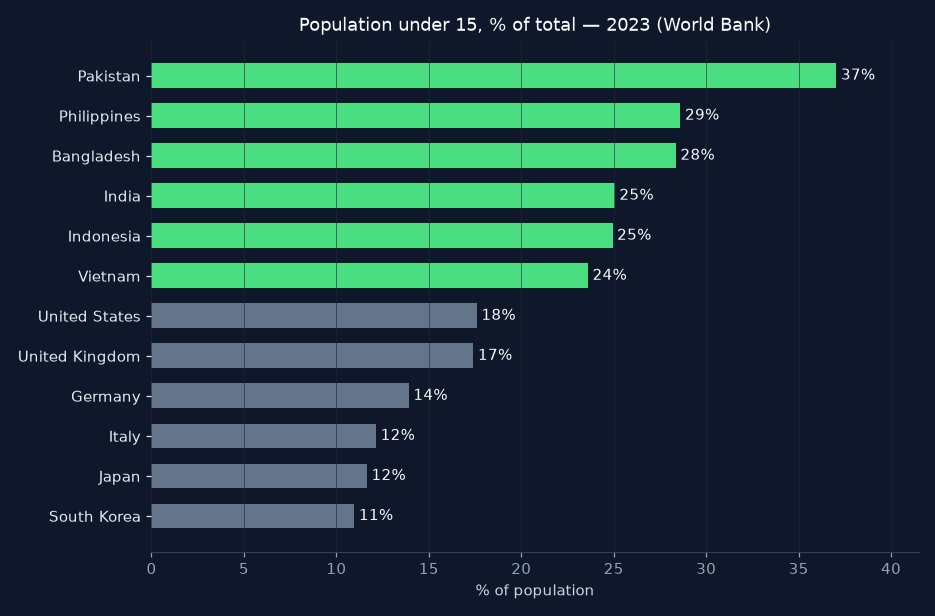
Population growth, urbanization and rising incomes can create new travel markets, particularly in parts of Asia, Africa, Latin America and the Gulf. Shorter regional routes may allow these travelers to take international trips before long-haul travel becomes affordable.
But a young population is not the same as a traveling middle class. Disposable income, passports, visa access, transport networks and political stability determine how much potential becomes actual demand.
Regional cooperation can help by simplifying border procedures, improving connections and making multi-country itineraries easier to purchase. The opportunity is real, but tourism authorities should base investment on measured origin–destination flows rather than demographic projections alone.
9. Where the opportunities may emerge
Southeast Asia: Dense regional markets, established tourism services and short-haul air networks provide advantages. Vietnam, Thailand, Malaysia and Indonesia each have different strengths and constraints. Competition will increasingly depend on accessibility, value, reputation and product quality.
The Gulf: Strong aviation networks and substantial investment capacity support premium tourism and international connections. The challenge is ensuring that capital-intensive projects generate sustainable returns rather than relying indefinitely on public support.
Latin America: Domestic markets, regional travel and favorable exchange rates in some countries can create opportunities. Currency volatility, connectivity and financing costs remain significant risks.
Africa: Population growth and distinctive tourism assets offer long-term potential, but the conversion of that potential into visitor spending depends on affordable transport, functioning payments, security and reliable infrastructure.
South Asia: Large domestic markets and growing regional demand create opportunities for a broader range of tourism products. Congestion, infrastructure gaps and uneven purchasing power will influence which destinations benefit most.
None of these regions is a guaranteed winner. The advantage belongs to destinations that turn geographic and demographic potential into accessible, competitive experiences.
10. Europe can compete by making travel easier
Europe retains extraordinary cultural assets, mature transport networks and strong destination brands. Its challenge is not a shortage of reasons to visit. It is the cumulative cost and complexity of visiting some destinations.
Tourism taxes, accommodation prices, airport costs and administrative requirements can add up. Some charges serve legitimate public purposes, especially where tourism places pressure on residents and infrastructure. But their combined effect should be measured against the experience delivered and the alternatives available to travelers.
Europe's opportunity is straightforward: protect what makes its destinations attractive while reducing unnecessary friction. Better regional rail connections, clear pricing, simpler procedures and smarter visitor management can strengthen competitiveness without abandoning environmental or community goals.
Less friction creates more potential.
11. The winning business model is flexible
When capital is expensive, flexibility becomes valuable. Businesses that can adjust capacity, manage fixed costs and reach customers directly may be better positioned than those carrying large debts against uncertain demand.
Asset-light models can help operators avoid tying up capital in buildings or vehicles, although they also create dependence on landlords, suppliers and distribution partners. The goal is not to avoid owning assets at all costs; it is to match ownership and financing to reliable demand.
Likewise, a low-cost local operating base is attractive only when travelers can reach the destination at a reasonable total price. An inexpensive hotel cannot compensate for an unaffordable flight.
The strongest businesses combine cost discipline, dependable service, market knowledge and control over customer relationships.
12. What destination managers should do now
- Calculate the full cost of visiting. Compare visas, airfares, airport charges, accommodation taxes, attraction fees and payment costs with at least three competing destinations. Remove unnecessary surprises.
- Protect access before increasing promotion. Review airline economics, border processing, regional transport and payment settlement. Marketing cannot solve every access problem.
- Measure reputation separately from product quality. Track safety perceptions, reviews and source-market concerns, and respond with credible information rather than reassurance alone.
Product quality is what visitors find when they arrive. Reputation is what everyone believes before they arrive. They move independently — a service problem can be fixed in a season, while the perception it created outlasts the fix by years.
So measure it separately. Track perceived safety, what reviews actually say, and which concerns belong to which source market. A long-haul market worried about stability and a regional market worried about price are different problems, and one reputation score hides both.
Then respond with evidence, not reassurance. "The destination is safe" is unfalsifiable. What changed, when, and how it can be verified is what moves perception.
DestinationPro racks sentiment across eight categories weekly, shows which concerns sit in which source market, and runs the response from detection through measured recovery — included with a subscription.
- Test the real size of nearby markets. Examine household purchasing power, trip frequency, length of stay and spending before shifting budgets toward domestic or regional travel.
- Help local businesses retain more revenue. Improve digital distribution, direct booking capability, local procurement and payment options.
- Develop reasons to stay longer. Link primary attractions to secondary destinations, local experiences and multi-day itineraries.
- Assess investment against realistic demand. Do not treat visitor-growth forecasts as proof that another airport, resort or major attraction will be financially viable.
- Publish better measures of success. Report length of stay, spending, profitability, local economic retention and resident benefits alongside arrivals.
These priorities are consistent with the practical approach outlined in The Small DMO Playbook: collect information that changes decisions rather than building dashboards for their own sake.
Conclusion: who keeps the margin?
The next decade will not simply reward the destinations with the most famous attractions, the biggest airports or the largest advertising budgets. It will reward those that make travel easier to buy, more affordable to deliver and more valuable to the communities and businesses providing it.
Some destinations will attract more visitors but retain less revenue. Others may receive fewer travelers yet generate stronger returns through longer stays, better products and more efficient operations.
For tourism ministers, destination management organizations and investors, the question is therefore not just How many people can we attract?
It is how much economic value remains after the airline, the platform, the payment provider, the lender and the government have taken their share?
That is where the wind is blowing. And that is the test of a successful visitor economy.