Sovereign Debt and the Energy Crisis: How They Will Reshape Global Tourism
The era of cheap long-haul travel is under threat. Rising sovereign debt, higher energy costs, and shrinking government support could reshape global tourism. Tourism leaders must prepare for fundamental shifts in travel demand, aviation connectivity, and destination competitiveness.

Part I — The Warning
The era of relatively cheap long-haul travel was built on three foundations: affordable borrowing, accessible energy, and substantial government support. All three are now under pressure.
Yet much of the tourism industry continues to plan, invest, and forecast demand using assumptions developed during four decades of generally declining interest rates, expanding credit, and relatively affordable international mobility.
Those assumptions are becoming increasingly dangerous.
Two powerful economic forces are converging: a sovereign debt problem that governments can no longer easily ignore, and an energy transition that has yet to deliver affordable alternatives at the scale global transport requires.
For tourism leaders, particularly those dependent on long-haul markets, these are not distant macroeconomic concerns. They threaten the foundations of destination competitiveness, airline connectivity, visitor purchasing power, and future investment.
The consequences could reshape international tourism for the next decade.
1. The Sovereign Debt Crisis Is Already Here
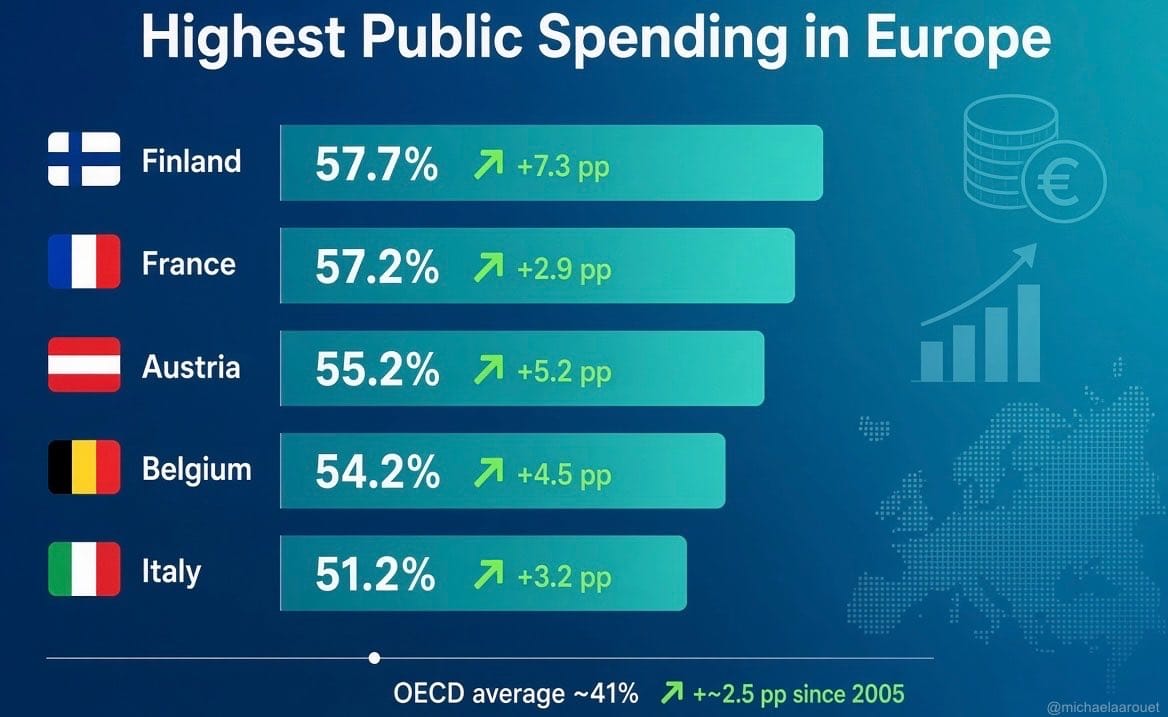
Government debt has reached levels that would have seemed extraordinary a generation ago.
Recent figures illustrate the scale of the problem. Gross government debt as a percentage of GDP stands at approximately:
- Japan: 236.7%
- Italy: 135.3%
- United States: 120.8%
- France: 113.1%
- Canada: 110.8%
- United Kingdom: 101.3%
These figures represent different national circumstances, but the underlying challenge is common: governments must finance substantial debt while meeting growing demands for public spending.
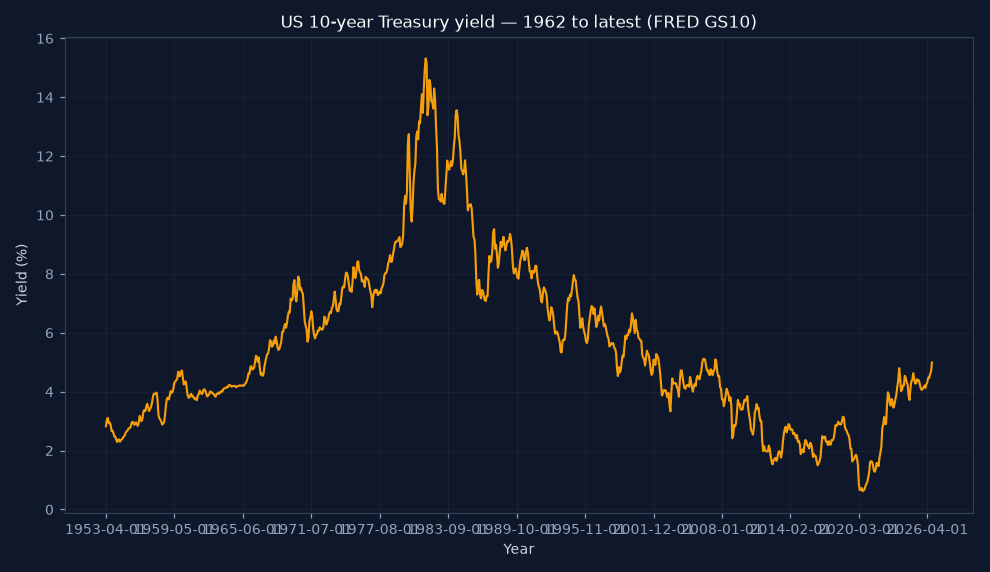
For decades, falling interest rates helped governments manage expanding debt obligations. That environment has changed. Higher borrowing costs mean debt servicing consumes a larger share of public resources, leaving less room for infrastructure, social services, and economic development.
Historically, governments facing excessive debt have relied on combinations of inflation, taxation, spending restraint, restructuring, and financial repression to restore fiscal balance.
None is painless.
The consequences extend well beyond public finances. Higher taxes and persistent inflation erode household purchasing power. Weaker currencies increase the cost of foreign travel. Fiscal constraints limit governments' ability to support airlines, airports, tourism promotion, and destination infrastructure.
In more severe circumstances, governments may introduce currency restrictions or capital controls, creating additional barriers to international tourism.
For destination leaders, sovereign debt is no longer simply a financial-market issue. It is becoming a direct threat to tourism demand and competitiveness.
2. The End of Cheap Money
For much of the past forty years, declining interest rates supported economic expansion and encouraged borrowing by governments, corporations, and households.
Airlines financed aircraft fleets. Airports expanded capacity. Hotel developers invested in new properties. Consumers benefited from readily available credit, rising asset values, and relatively affordable financing.
Long-haul tourism flourished within that environment.
But the cost of money has changed.
Higher interest rates raise the cost of financing aircraft, hotels, airports, and tourism infrastructure. They also increase mortgage payments, consumer borrowing costs, and the financial pressures facing households.
The effect on discretionary travel can be substantial.
International leisure travel, particularly expensive long-haul holidays, competes directly with other household priorities. When disposable income comes under pressure, travelers may shorten holidays, choose closer destinations, downgrade accommodation, or postpone travel entirely.
There is also a broader question about how economic prosperity is measured.
Government expenditure contributes to GDP, but not all expenditure generates equivalent long-term economic value or increases household purchasing power. Debt-financed spending can sustain economic activity temporarily without necessarily creating the productive capacity needed to support future growth.
Tourism forecasts built largely on headline GDP growth may therefore overlook weaknesses in household finances and underlying private-sector demand.
This distinction matters.
A destination can operate in a growing economy while its potential visitors become less able to afford an international holiday.
For long-haul destinations, the danger is particularly significant because their visitors face higher transport costs and generally make larger financial commitments.
3. The Energy Crisis: A Higher Cost Floor for Travel
Energy presents the second major structural challenge.
For more than a decade, investment in conventional oil and gas development has faced increasing regulatory, financial, and political pressure as governments and investors pursue decarbonization.
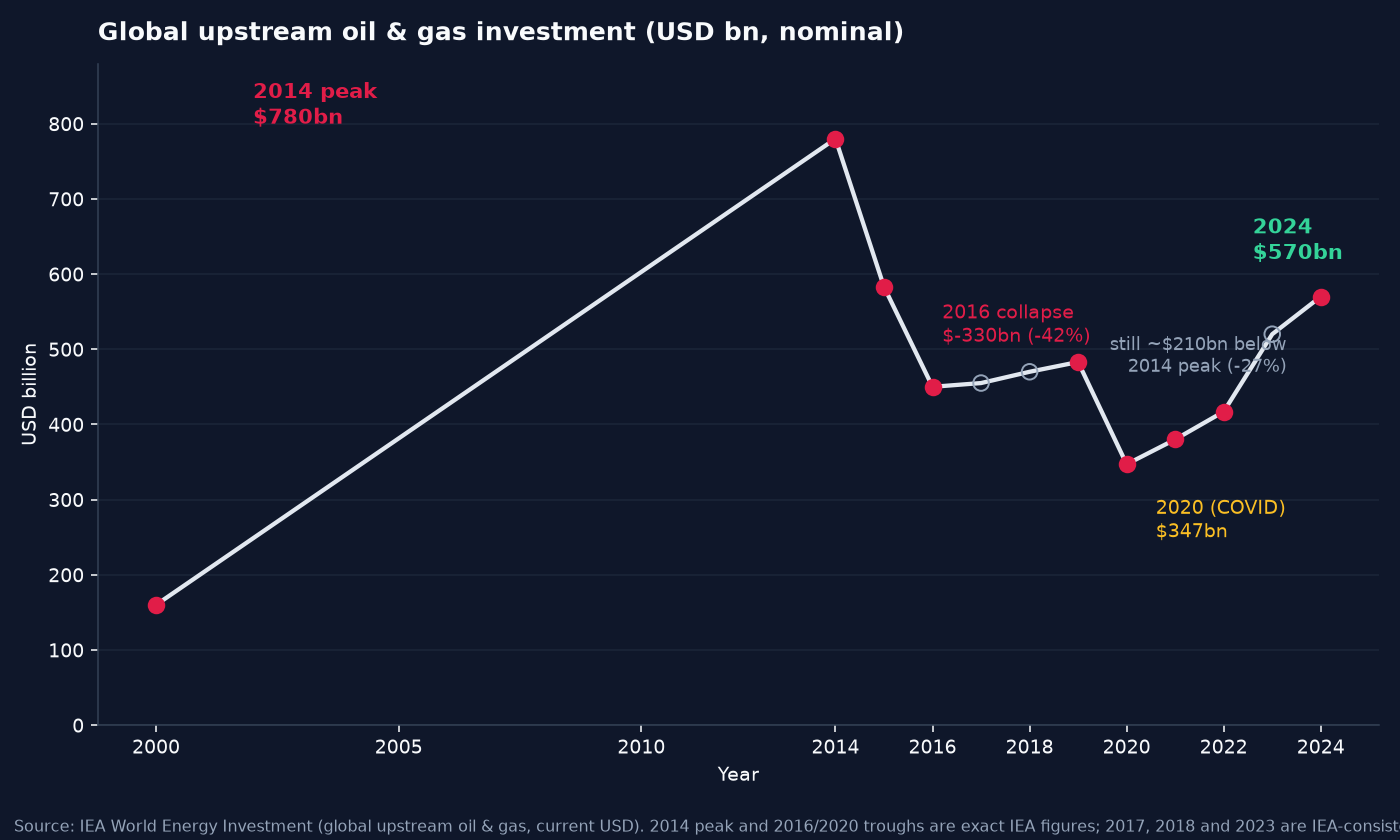
Global upstream oil and gas investment fell sharply after 2014, from approximately $780 billion to $450 billion in 2016, before declining further during the pandemic. Although investment subsequently recovered, it remained well below its earlier peak in 2024.
The problem is not simply whether the world should transition toward lower-carbon energy. It is whether alternative energy systems can be developed quickly enough, affordably enough, and at sufficient scale to replace existing supply.
That remains a fundamental challenge.
Renewable electricity has expanded rapidly, but aviation requires exceptionally energy-dense fuels. Batteries, hydrogen, and sustainable aviation fuels each face technological, infrastructure, cost, or supply constraints.
Policy ambitions cannot eliminate those physical and economic limitations.
When investment in existing energy sources declines faster than viable substitutes can expand, the result can be tighter supply, greater price volatility, and higher costs.
Aviation is particularly exposed.
Fuel typically represents one of the largest operating expenses for airlines, often approaching 30% of total costs, depending on prevailing prices and airline operations.
Long-haul flights are especially vulnerable to high fuel bills because of the considerable distances involved, even though efficient widebody aircraft can achieve relatively low fuel consumption per passenger-kilometer.
Airlines can hedge against temporary fuel-price movements, but hedging cannot permanently eliminate sustained increases in energy costs.
And the consequences extend beyond aviation.
Higher energy costs affect hotels, ground transport, food production, construction, and virtually every component of the visitor economy.
Energy costs establish a floor beneath the price of travel. If that floor rises, destinations must either absorb the increase through lower margins or pass it on to visitors.
Neither option is attractive for an industry already exposed to intense international competition.
4. How the Costs Reach the Traveler
The combined effects of sovereign debt and expensive energy eventually reach the consumer.
They do so through several interconnected channels.
Declining Purchasing Power
Higher taxation, inflation, increased borrowing costs, and weakening currencies reduce the amount households can allocate to discretionary spending.
International holidays are particularly sensitive because travelers must pay for transport, accommodation, activities, insurance, and other expenses, often in foreign currencies.
When household budgets tighten, distance becomes an important consideration.
Travelers may continue taking holidays, but they are more likely to favor destinations closer to home, shorter stays, and experiences offering greater perceived value.
For destinations dependent on visitors traveling thousands of kilometers, even a modest shift in consumer preferences can have substantial economic consequences.
Airlines Face Rising Costs
Aircraft purchases, leasing arrangements, fuel, maintenance, and many spare parts are priced internationally, often in US dollars.
Airlines operating in countries with depreciating currencies face additional financial pressure.
Higher financing and operating costs can translateAirlines Face Rising Costs
Aircraft purchases, leasing arrangements, fuel, maintenance, and many spare parts are priced internationally, often in US dollars.
Airlines operating in countries with depreciating currencies face additional financial pressure.
Higher financing and operating costs can translate into increased airfares, reduced frequencies, or the withdrawal of marginal routes.
This is particularly important for smaller destinations whose international connectivity depends on relatively few airlines.
Government Support Becomes Less Reliable
Governments have historically played an important role in supporting aviation and tourism through infrastructure investment, airline assistance, promotional budgets, and route-development incentives.
The pandemic demonstrated the extraordinary scale of that support, with governments providing substantial financial assistance to airlines.
But heavily indebted governments may find it increasingly difficult to repeat such interventions.
Tourism authorities could face reduced marketing budgets just as competition for international visitors intensifies.
Airlines may receive less assistance in maintaining unprofitable but strategically important routes.
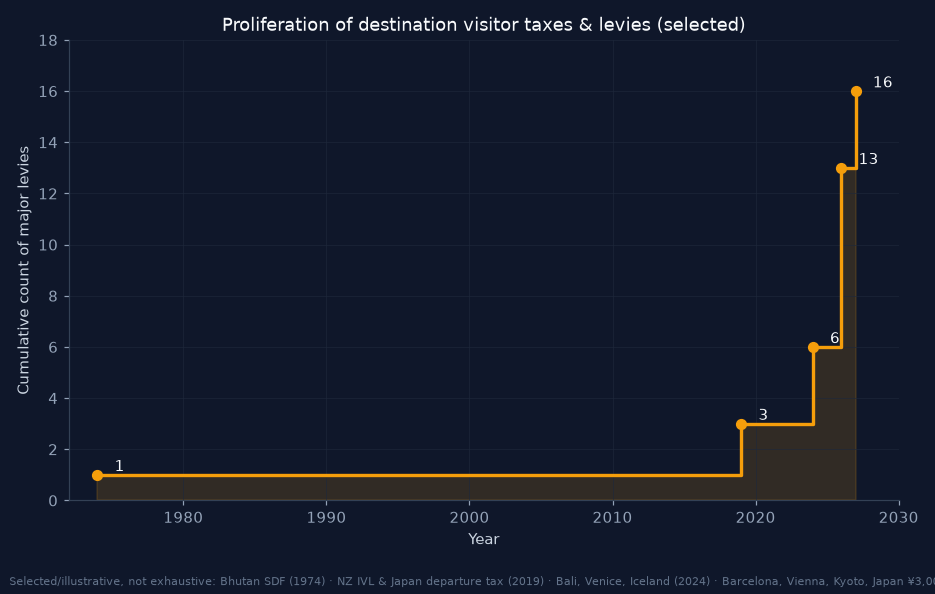
The Growing Kingdom of Fees
One consequence of fiscal pressure deserves particular attention: the proliferation of taxes and charges imposed on travelers.
Tourist taxes, departure fees, airport charges, electronic visa fees, environmental levies, and other surcharges increasingly add to the total cost of a journey.
Some charges serve legitimate purposes, including infrastructure development and environmental protection. Others primarily generate additional government revenue.
Regardless of their justification, their cumulative impact matters.
A destination may appear competitive when comparing hotel prices, yet become considerably less attractive once flights, taxes, visas, and mandatory charges are included.
For governments seeking additional revenue, international visitors can appear an appealing tax base.
But tourism is competitive. Travelers can change destinations, reduce spending, or decide not to travel.
The danger is that governments facing fiscal pressure may increasingly tax the very industry they depend on for economic growth.
5. Geopolitics Adds Another Layer of Risk
The financial and energy pressures facing tourism are compounded by an increasingly fragmented geopolitical environment.
Sanctions, airspace restrictions, visa policies, payment-system changes, and political tensions already influence where people can travel and how much those journeys cost.
Airlines may need to operate longer routes to avoid restricted airspace, increasing fuel consumption and operating expenses.
Visitors may encounter difficulties making payments, obtaining visas, or accessing destinations previously considered straightforward.
Payment systems are also evolving, with regional platforms and alternative financial networks becoming more important in international commerce.
These developments complicate destination marketing, distribution, and visitor services.
At the same time, misinformation, political narratives, and AI-generated content can undermine confidence in travel information.
Trust, predictability, and ease of access are essential elements of international tourism. When they weaken, destinations become more difficult to sell, even when their underlying attractions remain unchanged.
The global tourism map is increasingly influenced not only by geography and consumer preference, but also by financial and political restrictions.
6. The Two Crises Reinforce Each Other
The greatest danger lies in the interaction between sovereign debt and energy costs.
These are not isolated problems.
Higher energy prices increase transport and household expenses, potentially slowing economic growth and reducing tax revenues.
Governments already burdened by debt have less capacity to protect consumers or businesses from these increases.
Attempts to provide financial relief can deepen deficits, while higher taxation or reduced public spending may further weaken household demand.
The pressures reinforce one another.
For tourism, this creates a difficult operating environment.
Airlines face higher costs while consumers become more price-sensitive. Hotels and tourism businesses encounter rising operating expenses while governments have fewer resources available for destination development and promotion.
Investment becomes more expensive at precisely the moment destinations may need new infrastructure and more efficient transport systems.
The result is not necessarily a collapse in global travel.
It is more likely to be a structural redistribution of demand.
7. The Long-Haul Tourism Map Will Change
The consequences for international tourism could become increasingly visible over the next several years.
Long-haul travel is unlikely to disappear. Affluent travelers, business travelers, and consumers with strong personal motivations will continue flying internationally.
But the composition and geography of demand may change substantially.
Premium travel could gain market share as middle-income consumers become more cautious about expensive international holidays.
Regional tourism may strengthen as travelers choose destinations requiring shorter and less costly journeys.
Airlines may concentrate capacity on stronger, more profitable routes, reducing service to marginal destinations.
Major aviation hubs could consolidate traffic along established corridors, while destinations dependent on limited long-haul connections face greater vulnerability.
For tourism authorities, this raises serious questions about future market development.
A destination that has relied heavily on visitors from Europe or North America may find those markets less dependable.
Promotional strategies built around expanding long-haul arrivals may no longer deliver the anticipated returns.
Likewise, major investments justified by forecasts of sustained international passenger growth deserve closer examination.
The industry should not assume that the travel patterns of the past forty years will continue unchanged.
The future may be defined less by the total number of people traveling and more by where they travel, how far they go, and what they can afford.
8. A Warning for Tourism Leaders
The tourism industry has repeatedly demonstrated its ability to recover from crises.
But recovery from a temporary disruption is fundamentally different from adapting to a long-term change in economic conditions.
The convergence of sovereign debt pressures and energy constraints represents a potential structural change, not simply another business cycle.
Tourism leaders should recognize that many of the conditions supporting the expansion of long-haul travel are becoming less reliable.
Government financing is increasingly constrained. Energy remains a major source of cost and uncertainty. Household purchasing power is under pressure in important source markets. And the international travel environment is becoming more fragmented.
The implications extend across destination marketing, aviation connectivity, infrastructure investment, and tourism development.
For countries and regions heavily dependent on long-haul visitors, the stakes are particularly high.
The danger is not that people will stop traveling.
The danger is that tourism organizations, airlines, and governments will continue planning for a world that no longer exists.
The central lesson is straightforward: a crisis does not necessarily eliminate tourism demand. It redirects it.
Over the coming decade, that redirection could be one of the most consequential changes facing the global tourism economy.
Recognizing the threat is the first step.
Understanding which destinations, markets, and business models may benefit from the resulting shifts is the subject of Part II.