The Cambodia Scam Bill and the Expanding U.S. Sanctions Machine
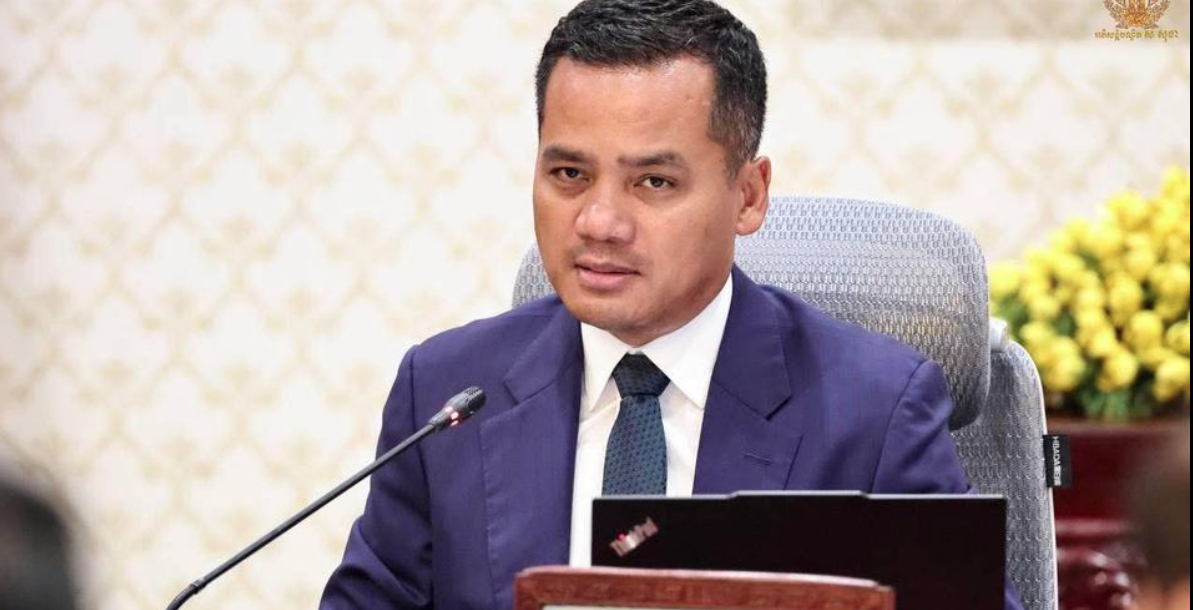
According to the report, Cambodia’s Deputy Prime Minister and Interior Minister Sar Sokha spent roughly $285,000 on two U.S. law firms — Seiden Law and Nelson Mullins — in an effort to keep his name out of the proposed Scam Compound Accountability and Mobilization Act, also known as S.2950 in the 119th Congress.
The proposed bill would require the U.S. administration to impose sanctions on officials who protect, enable, or profit from scam compounds in Southeast Asia.
Nelson Mullins appears to be handling diplomatic engagement with Congress and the administration. Seiden Law is focused more directly on OFAC and the congressional committee reviewing the bill. The bill reportedly also names other Cambodian figures, including Cambodian officials and Hun To, a cousin of Prime Minister Hun Manet.
This case is important because it shows how the U.S. sanctions system now works in practice. A foreign official does not have to be convicted of a crime, indicted, or even formally designated yet. If his name appears in a sanctions bill, the safest response is to hire Washington lawyers immediately.
That is not unusual. It is now the standard playbook.
The U.S. Sanctions Machine: How It Works
The U.S. sanctions system rests on three main pillars:
-
Statutory authority
-
Bureaucracy
-
Enforcement
Together, these create one of the most powerful financial coercion systems in the world.
1. Statutory Authority
The main legal workhorse is the International Emergency Economic Powers Act, or IEEPA, passed in 1977.
IEEPA allows the U.S. president to declare a “national emergency” and then freeze assets, ban transactions, and restrict dealings with foreign persons, companies, or governments.
The key point is that the definition of “national emergency” is broad. Once the emergency is declared, the executive branch receives enormous power.
2. Bureaucracy
The main agency is OFAC, the Office of Foreign Assets Control, inside the U.S. Treasury Department.
OFAC compiles evidence, reviews targets, makes designations, and maintains the Specially Designated Nationals List, commonly known as the SDN List.
Once a person or entity is placed on the SDN List, the consequences are immediate and severe.
3. Enforcement
Any U.S. person or company that deals with an SDN-designated person or entity risks civil penalties or criminal referral.
The enforcement standard is strict. In many cases, a company can be punished even if it did not knowingly violate sanctions.
Foreign banks also face a brutal choice: comply with U.S. sanctions or risk losing access to U.S. dollar clearing.
That is what gives the system its global reach.
The Legal Chain
The basic process works like this:
-
The president issues an executive order.
-
The order declares a national emergency.
-
The order invokes IEEPA or another sanctions statute.
-
OFAC identifies specific persons, entities, vessels, or aircraft.
-
These targets are added to the SDN List.
-
U.S. persons must freeze assets and stop dealings.
-
Foreign banks that continue servicing those targets risk losing access to the U.S. financial system.
There is no criminal conviction required.
There is no indictment required.
There is no hearing before designation.
There is no ordinary judicial process before the financial punishment begins.
What Triggers a Designation?
OFAC can rely on intelligence from many sources, including:
-
CIA reporting
-
FBI reporting
-
State Department reporting
-
Foreign government partners
-
United Nations panels
-
Open-source reporting
-
Financial intelligence
-
Law enforcement information
The evidentiary package usually goes through an inter-agency review involving Treasury, Justice, State, and other agencies as needed.
But the legal standard is not the criminal standard of “beyond a reasonable doubt.” OFAC generally needs only a reasonable basis for designation.
That is a remarkably low threshold for a punishment that can financially destroy a person or company.
The Expanding Categories of Sanctions
The U.S. now operates roughly 40 distinct sanctions programs.
They cover areas such as:
-
Terrorism
-
Narcotics trafficking
-
Weapons proliferation
-
Human rights abuses
-
Corruption
-
Transnational organized crime
-
Cyber-enabled activities
-
Election interference
-
Malign influence operations
-
Scam compounds and cyber-enabled fraud
The categories keep expanding.
The newest frontier is Southeast Asian scam compounds. The legal theory is that cyber-enabled fraud can threaten U.S. national security or economic health. That gives Washington the ability to target not only direct scammers, but also officials, landlords, recruiters, money mules, and anyone accused of materially assisting the system.
This is where Cambodia enters the picture.
The Sar Sokha Case
Sar Sokha’s reported $285,000 payment to Seiden Law and Nelson Mullins fits the normal Washington sanctions playbook.
One firm works the legal and administrative process: OFAC engagement, evidentiary rebuttals, jurisdictional arguments, and delisting strategy.
The other works Congress, diplomacy, and public positioning.
The goal is simple: keep the target off the list before the sanctions drop.
That is smart. Once a person is formally designated, banks become terrified of touching their money. Even paying U.S. lawyers can become difficult.
The proposed Cambodia scam bill is not yet the same thing as an OFAC designation. But being named in a bill can be the first step toward formal financial isolation.
The Legal Architecture Behind the Machine
The modern sanctions system rests on several major statutes.
Trading With the Enemy Act
Passed in 1917, the Trading With the Enemy Act was originally a wartime measure. It allowed the U.S. government to block trade and property involving enemy powers during war.
It was meant to be limited, specific, and temporary.
International Emergency Economic Powers Act
Passed in 1977, IEEPA was supposed to reform emergency economic powers after the abuses and permanent emergencies of the early and mid-20th century.
But the reform did not truly restrain executive power. It mostly gave the old power a cleaner legal structure.
The president could still declare an emergency and freeze foreign assets.
Anti-Terrorism and Effective Death Penalty Act
Passed in 1996, this law expanded sanctions tools against terrorists and related networks.
Foreign Narcotics Kingpin Designation Act
Passed in 1999, this law gave the U.S. another mechanism to target drug kingpins and their organizations.
Together, these laws created a flexible architecture that could be adapted to almost any foreign policy problem.
How the System Grew
1917: Wartime Beginnings
The sanctions system began with the Trading With the Enemy Act during World War I. It was originally aimed at wartime enemies, not the entire world.
1933: The Emergency Power Expansion
During the banking crisis, President Franklin Roosevelt used emergency economic powers in peacetime. This created a precedent for using wartime-style financial controls outside a formal war.
1950: OFAC Becomes Permanent
During the Korean War, President Truman blocked Chinese and North Korean assets after China entered the conflict. OFAC later became the permanent bureaucracy managing these restrictions.
What began as temporary emergency action became permanent administrative machinery.
1977: IEEPA, the Reform That Wasn’t
After Watergate, Congress investigated emergency powers and found that the U.S. had been living under several continuing national emergencies.
Congress passed the National Emergencies Act and IEEPA to create procedural guardrails.
But the substance of the power remained. The president still had enormous authority to freeze assets and restrict transactions.
The process was cleaned up. The power survived.
2001: The 9/11 Acceleration
After 9/11, the sanctions system changed dramatically.
The U.S. moved from broad country embargoes to targeted financial warfare against individuals, charities, companies, banks, and networks.
The Patriot Act gave Treasury new data and enforcement powers. Every major bank in the world had to screen transactions against U.S. sanctions lists.
Because the U.S. dollar is central to global finance, compliance became unavoidable.
2010–2015: The Iran Model
The Obama administration perfected what might be called financial strangulation.
Iran was cut off from dollar clearing, restricted from oil payments, pressured through SWIFT, and forced into financial isolation.
The strategy helped bring Iran to the negotiating table.
Washington took the lesson: sanctions could achieve geopolitical goals without troops, treaties, or congressional declarations of war.
2016: Global Magnitsky
The Global Magnitsky Act was a major turning point.
It allowed the U.S. to sanction foreign persons for corruption or human rights abuses anywhere in the world.
No specific war was needed.
No country-specific crisis was required.
The United States effectively declared itself a global financial judge of foreign conduct.
2022: Russia and the Explosion of Sanctions
Russia’s full-scale invasion of Ukraine caused a massive expansion of sanctions.
The U.S. and its allies added thousands of names and entities. They also targeted third-country evaders in places such as China, Turkey, and the UAE.
This marked a major shift toward secondary sanctions: punishing non-U.S. persons for helping sanctioned parties avoid restrictions.
2024–2026: The Scam Center Frontier
The newest frontier is cyber-enabled fraud and Southeast Asian scam compounds.
Washington has moved from sanctioning terrorists, drug cartels, and rogue states to sanctioning foreign officials accused of enabling non-state criminal networks.
That is the context of the Cambodia scam bill.
The Scale of the Sanctions Explosion
The growth has been dramatic.
Approximate trend:
-
2000: 912 designated parties
-
2009: Around 1,600
-
2017: Around 5,500
-
2021: 9,421
-
2024: More than 12,500
-
2025: Around 14,000, though lower than the 2024 peak in new annual additions
Treasury now runs dozens of active sanctions programs. The SDN List includes individuals, companies, vessels, aircraft, and other targets.
And that is only OFAC.
The Commerce Department’s Entity List adds thousands more export-control targets.
The modern sanctions system is no longer a narrow wartime tool. It is a permanent global financial control system.
Why the System Is So Powerful
The reason is simple: the U.S. dollar.
Most major international transactions touch the dollar system at some point. That usually means touching a U.S. bank, a U.S. correspondent account, or U.S.-regulated financial infrastructure.
This gives Washington leverage far beyond its borders.
If a foreign bank wants access to dollars, it must comply.
If a company wants access to global finance, it must screen against U.S. lists.
If a person is placed on the SDN List, banks everywhere often treat that person as untouchable.
The Off-Ramp Problem
Getting off the SDN List is extremely difficult.
A sanctioned person must convince OFAC that the basis for designation no longer exists. But OFAC does not usually publish its full evidence, does not provide a normal hearing, and has no obligation to respond quickly.
The process can take years.
For a foreign official, the practical route is:
-
Hire elite Washington law firms.
-
Lobby OFAC.
-
Lobby Congress.
-
Challenge evidence where possible.
-
Seek a carve-out or avoid designation entirely.
This is why Sar Sokha’s reported legal spending makes sense. It is cheaper to fight before designation than after financial isolation begins.
The Due Process Problem
The legitimacy problem is obvious.
The sanctions system can financially destroy foreign persons without:
-
Prior notice
-
A trial
-
A criminal conviction
-
Full access to evidence
-
A neutral hearing
-
Meaningful judicial review before punishment
If applied domestically in a criminal context, this would raise serious constitutional concerns.
But for foreign nationals, remedies are limited.
The U.S. government can act first and explain later.
The Emergency Permanence Problem
IEEPA requires a national emergency.
But many of these emergencies are renewed year after year, decade after decade.
An emergency that never ends is no longer an emergency. It is a governing method.
This is one of the core contradictions of the U.S. sanctions regime: extraordinary powers have become ordinary tools.
The Democratic Accountability Problem
A single executive order can financially isolate people across the world.
Congress delegated much of this power in 1977 and has generally expanded it since.
Now Congress is also moving toward legislative designation mandates, where bills name foreign officials directly and pressure Treasury to act.
That is a significant escalation.
In the Cambodia context, this means Congress is not merely empowering the executive branch to investigate. It is pushing toward specific names and specific consequences.
The Extraterritoriality Problem
The U.S. increasingly sanctions foreign persons for conduct that may have little direct U.S. connection, except that Americans are harmed or U.S. interests are invoked.
The scam compound framework goes even further. It targets officials in foreign countries for allegedly enabling crimes against U.S. citizens or the global public.
That is a form of prescriptive jurisdiction over foreign governance.
Some will say this is justified because scam compounds are abusive, criminal, and transnational.
Others will say it is another expansion of U.S. imperial financial power.
Both can be true at the same time.
The Blunt Weapon Problem
The SDN List is not a fine scalpel. It is a financial kill switch.
Once designated, a person or entity can lose access to:
-
U.S. banks
-
Dollar clearing
-
International wire transfers
-
Correspondent banking
-
SWIFT-linked financial services
-
Western counterparties
-
Major compliance-sensitive institutions
The 50 Percent Rule makes the effect even broader. Any entity owned 50 percent or more by a designated person is also effectively sanctioned.
That means one designation can cascade through holding companies, subsidiaries, suppliers, tenants, and business partners.
A single name can contaminate an entire network.
Where This Is Going
1. More Targets
Each new crisis creates a new sanctions category.
Terrorism, narcotics, corruption, cybercrime, election interference, disinformation, Russia, Iran, Myanmar, Venezuela, fentanyl, human rights, and now scam compounds.
The list rarely shrinks. New programs are added on top of old ones.
2. More Extraterritorial Reach
The U.S. is increasingly willing to target non-U.S. persons outside U.S. territory for conduct that affects U.S. interests indirectly.
This will continue.
3. More Fragmentation
The EU, UK, Canada, Australia, and others now operate their own sanctions systems.
These systems overlap but do not perfectly match.
For global banks and companies, compliance now means checking multiple lists with different legal standards, different evidence thresholds, and different delisting procedures.
4. More Evasion
Russia, China, Iran, and sanctioned networks have become better at evasion.
They use:
-
Shadow fleets
-
Shell companies
-
Crypto rails
-
Non-Western banks
-
UAE, Turkey, and other trade hubs
-
Alternative payment systems
-
CIPS and other China-linked payment infrastructure
The net is powerful, but it has holes.
5. More De-Dollarization Pressure
Every time Washington freezes reserves or cuts off access to dollar finance, other countries learn the same lesson:
The dollar is useful, but it is also a weapon.
That encourages alternatives.
BRICS expansion, bilateral swap agreements, central bank digital currency experiments, and China’s payment infrastructure are all partly driven by fear of being next.
The irony is that U.S. sanctions are powerful because the dollar is central. But each aggressive use of sanctions gives other powers more incentive to build systems outside the dollar.
The U.S. may be consuming its own financial hegemony one designation at a time.
The Cambodia Message
For Phnom Penh, the message is clear.
Washington is moving from sanctioning non-state actors to sanctioning state actors who are accused of enabling non-state criminal systems.
That is a serious escalation.
The old assumption that political cover protects senior officials is weakening.
If a Cambodian official has any connection to the scam economy, the risk is no longer theoretical. The risk includes:
-
Being named in a U.S. bill
-
Being targeted by OFAC
-
Losing access to dollar banking
-
Having family assets exposed
-
Facing travel complications
-
Becoming toxic to banks and counterparties
That is why hiring Washington lawyers early makes sense.
Once the designation happens, the room for maneuver shrinks.
The Bottom Line
The U.S. sanctions machine began as a temporary wartime measure in 1917. It expanded into peacetime through emergency powers in 1933. It became bureaucratically permanent in 1950. It was re-legitimized by IEEPA in 1977. After 9/11, it became a global financial surveillance and punishment system. After Iran, it became Washington’s preferred tool of coercive diplomacy. After Russia, it became enormous. Now, with Southeast Asian scam compounds, it is entering another frontier.
The Sar Sokha case is a useful illustration.
A foreign official who has not yet been formally designated is reportedly spending a quarter-million dollars on U.S. lawyers to avoid being pulled into the sanctions machine.
That tells us something important.
The sanctions process itself has become a form of punishment. Even the threat of designation is enough to force foreign officials into Washington’s legal and lobbying ecosystem.
Where does this go?
Likely toward more targets, more categories, more extraterritorial reach, more compliance fragmentation, and more resistance from countries trying to escape dollar dominance.
The open question is whether the system breaks from the outside, as alternative payment systems mature, or from the inside, as courts, Congress, allies, banks, or public opinion begin to question the legitimacy of a financial weapon with so few meaningful checks.
For now, the machine keeps expanding.